
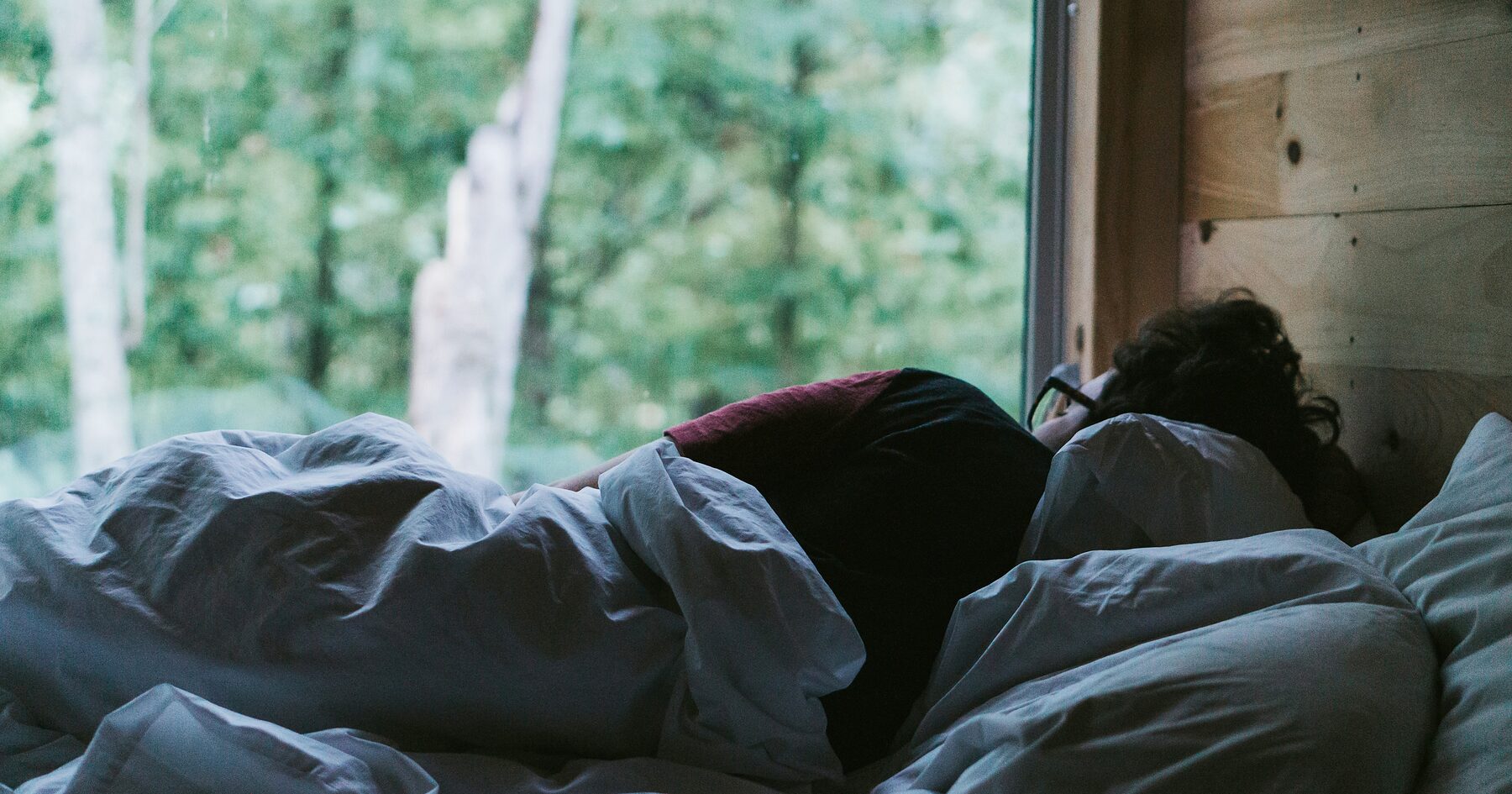
Nothing special happens at 3 am. The hour is an accident of when you fell asleep — what has changed is the kind of sleep you’re in when you get there.
The short answer
Usually no — sometimes yes, and the tells are specific.
Normal: you run four to six sleep cycles a night and can surface briefly between them, and by the small hours your deep sleep is spent while cortisol is already climbing toward morning. Not normal: waking most nights for weeks, snoring or gasping, or three bathroom trips. That second list is a pattern no bedtime habit fixes — and the American Academy of Sleep Medicine’s one strong recommendation for chronic insomnia is CBT-I, not a supplement.
Key takeaways
- A sleep cycle runs 80–100 minutes, four to six a night. Brief wakings between them are the design, not a fault.
- The nightcap bills you later. At every dose studied, alcohol shortened time to fall asleep and consolidated early sleep — then increased disruption in the second half.
- Cortisol bottoms out around sleep onset and rises through the later half of the night, peaking near waking.
- The blood-sugar dip explanation is everywhere online and thin on evidence for healthy adults.
- Across 65 studies and 3,577 people aged 5 to 102, time awake after falling asleep rose with age and deep sleep fell.
- The AASM guideline suggests clinicians not use sleep hygiene on its own — and it’s the advice you’ll be handed most often.
What changes overnight
Your deep sleep is already spent
The US National Heart, Lung, and Blood Institute puts a cycle at 80 to 100 minutes, with four to six in a typical night — and says plainly that you may wake briefly between them.
The cycles aren’t identical. Stage 3 — deep slow-wave sleep, the hardest to rouse anyone from — is concentrated early, and REM stretches out later. So the back half of the night is built from the stages you surface from most easily. Same disturbance, different depth, different outcome.
Cortisol is already on its way up
Cortisol gets cast as the stress hormone, but it’s also the chemistry of getting up. A 2019 study in the Journal of Clinical Endocrinology & Metabolism sampled free cortisol continuously in healthy men over 72 hours: lowest around sleep onset, rising through the later part of sleep, peaking in every participant near waking.
Run stressed and that baseline sits higher, so the same ordinary pre-dawn climb has further to push you — out of light sleep and all the way into the room.
Alcohol front-loads the benefit
A review of the published human studies in Alcoholism: Clinical and Experimental Research found the same shape at every dose tested: shorter time to fall asleep, a more consolidated first half of the night, and increased sleep disruption in the second half. The first REM period was delayed at all doses.
If your wake-ups cluster on nights you had two drinks, you’ve found your variable.
The blood-sugar story
You’ll see 3 am waking pinned on a nocturnal glucose dip constantly. For healthy adults the evidence is thin, and it isn’t where to start. It’s a real conversation if you have diabetes, take insulin or a sulfonylurea, or eat very late and very large — and then it belongs with your provider, not a bedtime snack you invented.
Age moves the floor
Ohayon and colleagues pooled 65 polysomnography studies covering 3,577 healthy people aged 5 to 102. In adults, total sleep time, sleep efficiency, slow-wave sleep and REM all fell with age while time awake after falling asleep rose. After 60, only sleep efficiency kept declining significantly.
The threshold for a full waking drops, which is why the fundamentals stop being optional past forty. What doesn’t change is the target — see how much sleep you actually need.
Normal, or worth a doctor
Two people saying “I wake at 3 am” can be in completely different situations. This split decides everything else.
| What it looks like | Read it as | What to do |
|---|---|---|
| Wake, roll over, gone again in minutes | Normal — a between-cycle arousal you noticed | Nothing. Don’t start tracking it |
| Awake 30–90 minutes, mind racing, a few nights a week | Common — an arousal plus a worry that caught | Stimulus control and the evening fundamentals below |
| Only on nights you drank | Explained — second-half rebound | Move the last drink earlier, or drop it |
| Snoring, gasping, or told you stop breathing | Red flag — possible sleep apnea | Provider. No habit change substitutes for a sleep study |
| Up to urinate two or three times a night | Red flag — nocturia has causes worth finding | Provider. Bladder, prostate, glucose and apnea all sit behind it |
| Most nights for months, and wrecked by day | Chronic insomnia territory | Ask specifically for CBT-I |
| Waking with dread, low mood or a pounding heart | Red flag — sleep is the symptom, not the problem | Provider. This one is worth saying out loud |
Getting back to sleep tonight
- Don’t look at the clock. Turn it around, put the phone across the room. Reading “3:14” starts a countdown, and a countdown is a stress response.
- Give it about 20 minutes, then get up. Somewhere dim, something boring, back to bed when you’re sleepy. This is stimulus control, a conditional recommendation in the AASM guideline, and the point is keeping your bed associated with sleep rather than frustration.
- Keep the lights low. Bright light, phone screens especially, is a wake signal.
- Lengthen the exhale. In for four, out for six — lowering arousal, not summoning sleep.
Making it happen less often
- Same wake time, weekends included. An anchored rise time stabilises everything downstream of it.
- Move the alcohol earlier — the highest-yield change for anyone whose wake-ups track their drinking.
- Pull your caffeine cut-off forward. It lingers longer than almost anyone assumes; our caffeine and sleep guide has the timing.
- Cool, dark, quiet. Fewer reasons to surface — specifics in the ideal bedroom for sleep.
- Fix the basics first: better sleep naturally, the sleep hygiene mistakes worth dropping, and how to fall asleep faster.
Almost every article about 3 am waking hands you a sleep-hygiene checklist. The 2021 AASM clinical practice guideline suggests clinicians not use sleep hygiene as a single-component therapy — the one behavioural approach the panel advised against on its own. The strong recommendation is multicomponent CBT-I; stimulus control, sleep restriction and relaxation each get a conditional nod. Hygiene is the packaging.
Where supplements actually sit
Melatonin is what most people reach for, and it’s a timing signal rather than a sedative. NIH’s National Center for Complementary and Integrative Health puts the strongest evidence on jet lag and delayed sleep-wake phase disorder — in a 2018 trial, participants fell asleep an average of 34 minutes earlier. For chronic insomnia, NCCIH notes both the AASM and the American College of Physicians found not enough strong evidence to recommend it.
It isn’t inert either. NCCIH cites a 2024 CDC report of roughly 11,000 emergency department visits for unsupervised melatonin ingestion by children aged five and under between 2019 and 2022. Adult long-term safety data is limited.
Magnesium, glycine, L-theanine and valerian fill most sleep blends on mixed, mostly small evidence. If a mind that won’t stop is the problem rather than a shifted clock, something aimed at winding down at least matches the complaint — our look at CBD and sleep covers what those trials show.
Who should not just wait this out
- Anyone on prescription medication. Melatonin and herbal sleep blends interact with blood thinners, blood-pressure drugs, immunosuppressants, diabetes medication and sedatives. Ask a pharmacist first.
- Pregnant or nursing. Safety data is thin across the whole sleep-supplement category. Don’t self-experiment.
- Anyone whose waking has lasted weeks. That’s a provider conversation, not a supplement one — there may be a cause no gummy touches.
- Anyone with a red flag above. Snoring, gasping, repeated urination or waking in a panic outrank any bedtime routine.
So what do you actually do
Do the free things first, in order: anchor your wake time, move the last drink earlier, pull the caffeine cut-off forward, stop checking the clock. Give it three weeks. Most 3 am waking improves on those four alone, and none costs anything.
If it hasn’t budged — or if a red flag applied from the start — that’s the moment for a provider and a conversation about CBT-I, not another bottle.
Questions people ask
How do I know if this is sleep apnea?
Often you can’t, from the inside — the tells get reported by someone else: loud snoring, gasping, pauses in breathing. Add morning headaches, daytime sleepiness despite enough hours in bed, or waking with a dry mouth. If two or more fit, ask for a sleep study rather than a better bedtime routine.
Why is it the same time every night?
Because your sleep onset is roughly the same time every night. Cycle forward four or five times from a consistent lights-out and you land in light sleep at a consistent hour. Add a consistent trigger — a full bladder, a partner turning over, the heating clicking off — and you get the same clock reading.
Should I eat something when I wake up?
Usually no. Eating is itself an alerting signal, so you’d be reinforcing a wake-up you want to fade. The exception is if you manage blood sugar and your provider has told you to.
Is waking at 3 am a sign of anxiety?
It’s common in anxious periods: higher baseline arousal makes light sleep easier to break and harder to return from. On its own it isn’t evidence of a disorder. If it comes with dread or low mood, or it’s affecting your days, raise it with someone.
Is this different in perimenopause?
Yes. Night-time waking is among the most reported sleep complaints in the menopause transition, and hot flushes give the second half of the night an extra trigger this article doesn’t cover. Separate piece: menopause and sleep.
Sources
- Sleep Phases and Stages — US National Heart, Lung, and Blood Institute, NIH.
- Continuous free cortisol profiles — circadian rhythms in healthy men — Journal of Clinical Endocrinology & Metabolism, 2019;104(12):5935–5947.
- Alcohol and sleep I: effects on normal sleep — Alcoholism: Clinical and Experimental Research, 2013;37:539–549.
- Meta-analysis of quantitative sleep parameters from childhood to old age in healthy individuals — Sleep, 2004;27(7):1255–1273.
- Behavioral and psychological treatments for chronic insomnia disorder in adults: an American Academy of Sleep Medicine clinical practice guideline — Journal of Clinical Sleep Medicine, 2021.
- Melatonin: What You Need To Know — National Center for Complementary and Integrative Health, NIH.
How we make money. Some links on this page are affiliate links. If you buy through one, we may earn a commission at no extra cost to you. It does not change what we write — see our affiliate disclosure.
These statements have not been evaluated by the Food and Drug Administration. CBD products are not intended to diagnose, treat, cure or prevent any disease. Serene Leaf does not physically test products; our assessments are based on published research, third-party lab reports and publicly available product information.
This article is information, not medical advice. Talk to a qualified healthcare provider before starting any supplement — especially if you are pregnant, nursing, taking medication or managing a diagnosed condition. 21+ only.